LTT Module 2 Training: Play to Learn – Mastering Gamification in the Classroom
Project Overview
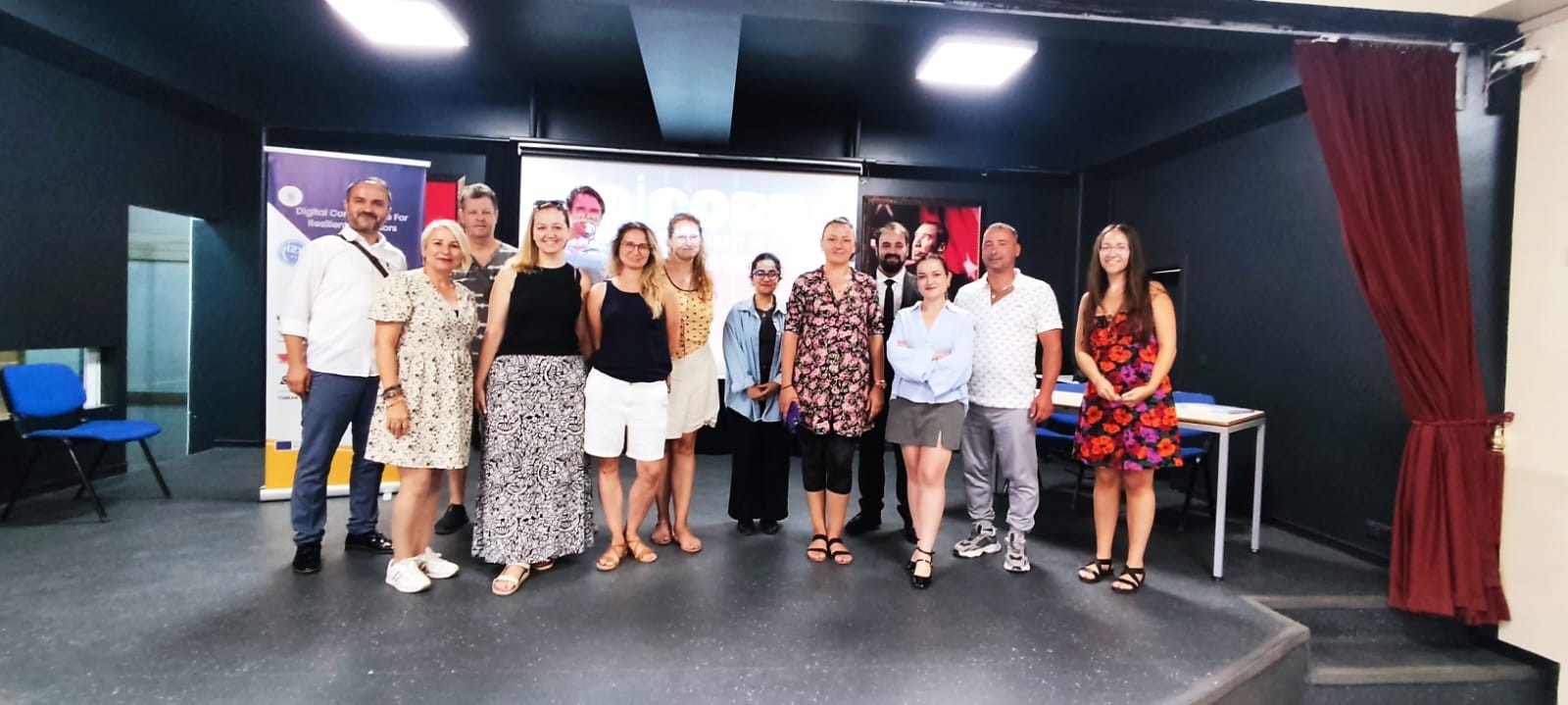
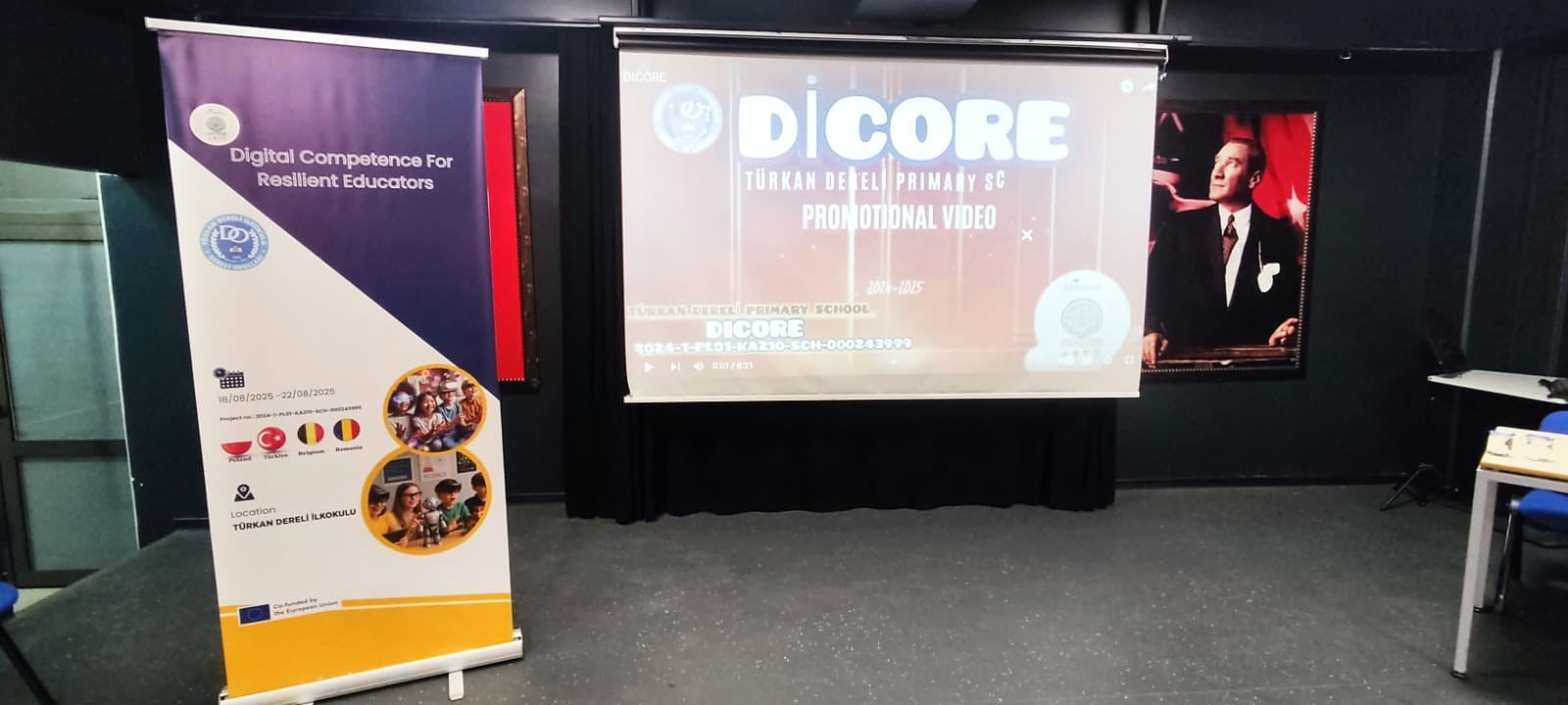
The Erasmus+ project Digital Competence for Resilient Educators (2024-1-PL-KA210-SCH-000243999) aimed to strengthen educators’ capacity to integrate innovative teaching methods and digital tools in education. As part of this initiative, Module 2: “Play to Learn – Mastering Gamification in the Classroom” was implemented in İzmit, Türkiye, from 18 to 22 August 2025.
The training focused on gamification-based learning supported by AR/VR/AI technologies, with a strong emphasis on fostering emotional, social, and 21st-century competencies in students.
Participants
The target group consisted of educators from the partner institutions:
- Stowarzyszenie “Aktywne Pogranicze” – Poland
- DAKTECH Innovative Soft SRL – Romania
- Türkan Dereli İlkokulu – Türkiye
- GO! Atheneum Grimbergen – Belgium
Objectives
The specific objectives of the training were to:
- Equip educators with tools and strategies for gamification using AR/VR/AI.
- Develop students’ emotional, social, and 21st-century skills.
- Increase student engagement and motivation through advanced educational technologies.
- Promote inclusive and accessible learning practices across different educational contexts.
Content and Methodology
The training was structured around presentations, workshops, and collaborative group work. The methodology included:
- Presentations of gamification tools integrated with AR/VR/AI.
- Application examples through videos demonstrating real classroom practices.
- Step-by-step guidance for designing gamified lessons aligned with educational objectives.
- Sample lesson plans tailored to various learning styles.
- Workshops fostering creativity, collaboration, and reflective practice.
- A strong focus on inclusivity, adaptability, and engagement in lesson design.
Program Schedule
- Day 1: Introduction to gamification and overview of AR/VR/AI in education.
- Day 2: Demonstrations of AR/VR/AI-based gamification tools and practical workshops.
- Day 3: Training on gamified lesson planning and group design activities.
- Day 4: Inclusive gamification strategies and partner collaboration for Module 2 development.
- Day 5: Presentation of group outcomes, feedback sessions, certificate distribution, and closing remarks.
Outcomes
The training achieved the following outcomes:
- Increased competence of educators in applying AR/VR/AI within classroom settings.
- Development of practical, ready-to-use gamified lesson plans.
- Improved capacity to foster student engagement and participation through innovative methods.
- Strengthened cooperation and knowledge exchange among partner institutions.
Conclusion
The Module 2 training successfully provided educators with both theoretical knowledge and practical experience in integrating gamification and advanced technologies into teaching. By the end of the program, participants were better equipped to design inclusive, engaging, and future-oriented learning experiences. Furthermore, the event contributed to the overarching project goal of enhancing digital competence and resilience among educators across partner countries.
Testimonials
Campus Fenix participates in Erasmus Project DICORE: An unforgettable experience!
From August 18 to 22, 2025, several teachers from Campus Fenix, GO! Atheneum Grimbergen had the opportunity to take part in the Erasmus+ project DICORE in İzmit, Turkey. This international training program, entitled “Play to Learn: Mastering Gamification in the Classroom,” offered an intensive and inspiring week focused on the latest digital and pedagogical innovations.
Throughout the five-day course, our teachers explored gamification, AR/VR, AI, and cutting-edge digital tools that are shaping the future of education. Topics such as digital ethics, safe use of digital tools, green technology, and creative learning with multimedia were thoroughly discussed. Workshops and hands-on sessions at the Kocaeli Science Center provided practical applications and allowed participants to experiment with concrete gamification solutions for classroom practice.
What made this experience truly special was not only the richness of the content but also the international collaboration. Teachers from different countries exchanged ideas, shared experiences, and worked together to develop new didactic perspectives. This cross-cultural cooperation offered great enrichment and provided our school with new insights to further strengthen 21st-century skills, creativity, and digital competences in our teaching.
For Campus Fenix, this participation was an enormous added value. Not only did our teachers gain new knowledge and skills, but they also returned to Grimbergen with renewed inspiration and motivation. This Erasmus project once again demonstrates how important international cooperation is in keeping education future-oriented and inclusive.
We look forward to sharing the acquired knowledge and experiences with our colleagues and students, and to continue building an innovative learning environment where play, technology, and learning go hand in hand.
Romania Testimonial
Today we had the joy of taking part in the first day of the Erasmus project ,, Digital competence for resilient educators”, an experience that began with emotion, enthusiasm, and curiosity. The day opened with an official introduction, a moment in which we got to know each other better, socialized, and discovered the diversity and beauty of the group we are part of. Every conversation was an opportunity to build new connections and to share different perspectives.
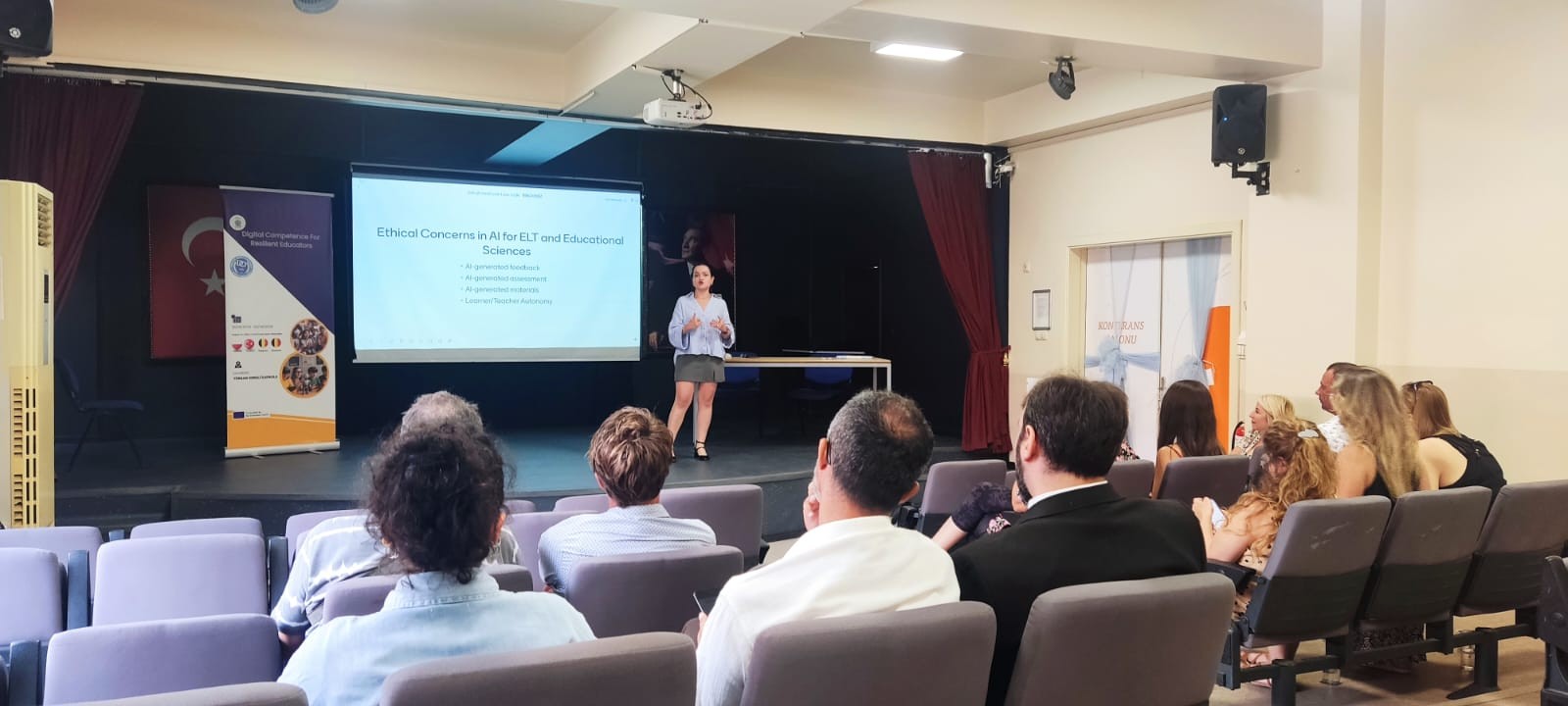
After completing the preliminary test, we explored topics of great relevance and interest: digitalization and ethics in education. It was truly inspiring to discuss the responsibility we hold when using digital tools, especially in our work with students. Together, we reflected on how technology can be a valuable ally, but also on the risks it carries if not used wisely.
Another meaningful moment was the presentation on the safe use of digital tools in education, where we learned how to integrate these resources into our teaching while keeping the well-being and protection of children at the very center.
We also discovered innovative platforms and applications related to artificial intelligence, multimedia, and streaming, tools that can foster both creativity and productivity. We discussed how AI can serve as an incredible support in the educational process, but also a challenge if not approached with responsibility.
The day concluded with feedback and group discussions, where we exchanged thoughts, ideas, and reflections on the experiences we had lived. I felt inspired and motivated, grateful to be part of a project that opens both mind and soul to new horizons.
Overall, it was an intense first day, filled with valuable insights, genuine human connections, and an excitement for all that lies ahead.
The second day of the project was full of learning, discoveries, and meaningful experiences. We started the morning with a visit to the Izmit Water and Sewage Administration, where we were warmly welcomed. The hosts introduced us to their laboratories, showed us the technology they use in their daily work, and even performed a practical experiment to test the pH of water. It was a fascinating moment that allowed us to better understand how science and technology can contribute to a cleaner and safer environment.
Later, we explored the topic of Green Technology and its use in education. The presentation was both interactive and inspiring, focusing on sustainable digital solutions and innovative tools that can be integrated into the classroom. The trainers constantly checked if everything was clear, asking us if we had understood and making sure that everyone felt involved and supported throughout the session.
The atmosphere was very engaging participants shared ideas, asked questions, and reflected together on how digital transformation and artificial intelligence can shape the future of education. We not only learned new concepts, but we also enjoyed the collaboration, the openness of the speakers, and the friendly way in which knowledge was shared.
In the afternoon, the program continued with group discussions and feedback, where we had the chance to express our impressions, exchange perspectives, and strengthen the connections between participants.
Day 2 was both educational and enjoyable a perfect balance between theory, practice, and teamwork. We left with new insights, useful skills, and the motivation to integrate what we learned into our professional paths.
TÜRKİYE IMPRESSIONS
When I first stepped into the room on the opening day of Module 2, I could feel the excitement in everyone’s eyes. After a short test and warm introductions, we began with sessions on digitalization and ethics led by professors from the University of Kocaeli. It was the perfect reminder that technology in education is not just about tools, but also about values. Later, Abdurrahman Barış introduced us to Suno, Videogen, and TV.Garden. These tools felt like a door opening into the future of teaching—creative, inspiring, and full of new possibilities.
The next day we visited the İzmit Water and Sewage Administration. Learning about green technologies in education was eye-opening. It reminded me that teaching is also about protecting the planet we live on. In the afternoon, we explored Human Anatomy and Gamma. I was amazed at how these platforms could make a lesson so powerful, almost like bringing a textbook to life.
Day three was all about coding. With the Robomaker team, I realized that coding is more than a technical skill—it is a way of thinking. It teaches problem-solving, creativity, and resilience. Later that day, tools like Mozart AI, KwaiCut, and Teachy showed me new ways to design content. I couldn’t help but think how much easier and more engaging my lessons could become with these digital companions.
On the fourth day, we spent time at the Kocaeli Science Center. Experiencing AR/VR-based gamification was incredible. We even got to create our own simple gamified content, and I kept imagining how excited my students would be if they had the same chance. In the afternoon, Abdurrahman Barış introduced more tools—Mult.dev, Runway, Creati, YouCut, PixVerse, and VIMAGE. For a moment, I felt less like a teacher and more like a digital artist.
Finally, the fifth day arrived. We gathered for the certificate ceremony and evaluation session. Holding the certificate in my hands, I thought back to all the moments of discovery, teamwork, and inspiration from the week. Sharing experiences with fellow participants and reflecting together made me realize just how much I had grown in only five days.
This program was not just about learning new technologies. It was about understanding that technology can amplify our emotions, our collaboration, and our creativity. Module 2 gave me more than knowledge—it gave me hope for the future of education
Polish Testimonial
The opening day of the DICORE Erasmus+ Project Turkey mobility marked a dynamic and intellectually rich start to the international initiative, bringing together educators from Belgium, Poland, and Romania. The event centered on advancing digital competencies among teachers, with a strong emphasis on AI-based tools and digital ethics—topics that are increasingly vital in today’s educational landscape. This collaborative setting fostered meaningful exchanges and laid the groundwork for deeper cross-border engagement in digital education.
Distinguished speakers from Kocaeli University—Assoc. Prof. Dr. Murat Dulkadiroğlu, Research Assistant Eylül Bala Altunay, Deniz Tuncer, and Esra Şahin—delivered insightful presentations that illuminated the transformative potential of artificial intelligence in teaching and learning. Their expertise provided participants with practical knowledge and visionary perspectives, reinforcing the importance of ethical and innovative approaches to digital transformation in schools. The academic depth of the sessions elevated the event’s value, offering participants a robust foundation for future pedagogical development.
Beyond its academic merit, the Day 1 event served as a powerful catalyst for international collaboration. By connecting educators across borders, it strengthened professional relationships and encouraged the exchange of best practices in digital education. The DICORE Erasmus+ Project continues to build a sustainable European network of digitally empowered teachers, and this mobility experience exemplifies the project’s commitment to fostering both competence and community in the evolving educational landscape.